The DELTA ROOTS Store
Merch

Roads, Rivers, & Routes — wear the story
Official Caps
No caps available right now — check back soon.
Books

Black Boy by Richard Wright
$30.00
Free Shipping"Superb. . . . A great American writer speaks with his own voice about matters that still resonate at the center of our lives." —New York Times Book Review
Read full descriptionHide description
A striking new edition of Richard Wright's powerful and unforgettable memoir, with a foreword by John Edgar Wideman and an afterword by Malcolm Wright, the author's grandson.
When it exploded onto the literary scene in 1945, Black Boy was both praised and condemned. Orville Prescott of the New York Times wrote that "if enough such books are written, if enough millions of people read them maybe, someday, in the fullness of time, there will be a greater understanding and a more true democracy." Yet from 1975 to 1978, Black Boy was banned in schools throughout the United States for "obscenity" and "instigating hatred between the races."
Wright's once controversial, now celebrated autobiography measures the raw brutality of the Jim Crow South against the sheer desperate will it took to survive as a black boy. Enduring poverty, hunger, fear, abuse, and hatred while growing up in the woods of Mississippi, Wright lied, stole, and raged at those around him—whites indifferent, pitying, or cruel and blacks resentful of anyone trying to rise above their circumstances. Desperate for a different way of life, he made his way north, eventually arriving in Chicago, where he forged a new path and began his career as a writer. At the end of Black Boy, Wright sits poised with pencil in hand, determined to "hurl words into this darkness and wait for an echo." More than seventy-five years later, his words continue to reverberate. "To read Black Boy is to stare into the heart of darkness," John Edgar Wideman writes in his foreword. "Not the dark heart Conrad searched for in Congo jungles but the beating heart I bear."
One of the great American memoirs, Wright's account is a poignant record of struggle and endurance—a seminal literary work that illuminates our own time.
Proceeds go toward the continued uncovering and telling of the story of the Elaine Massacre.
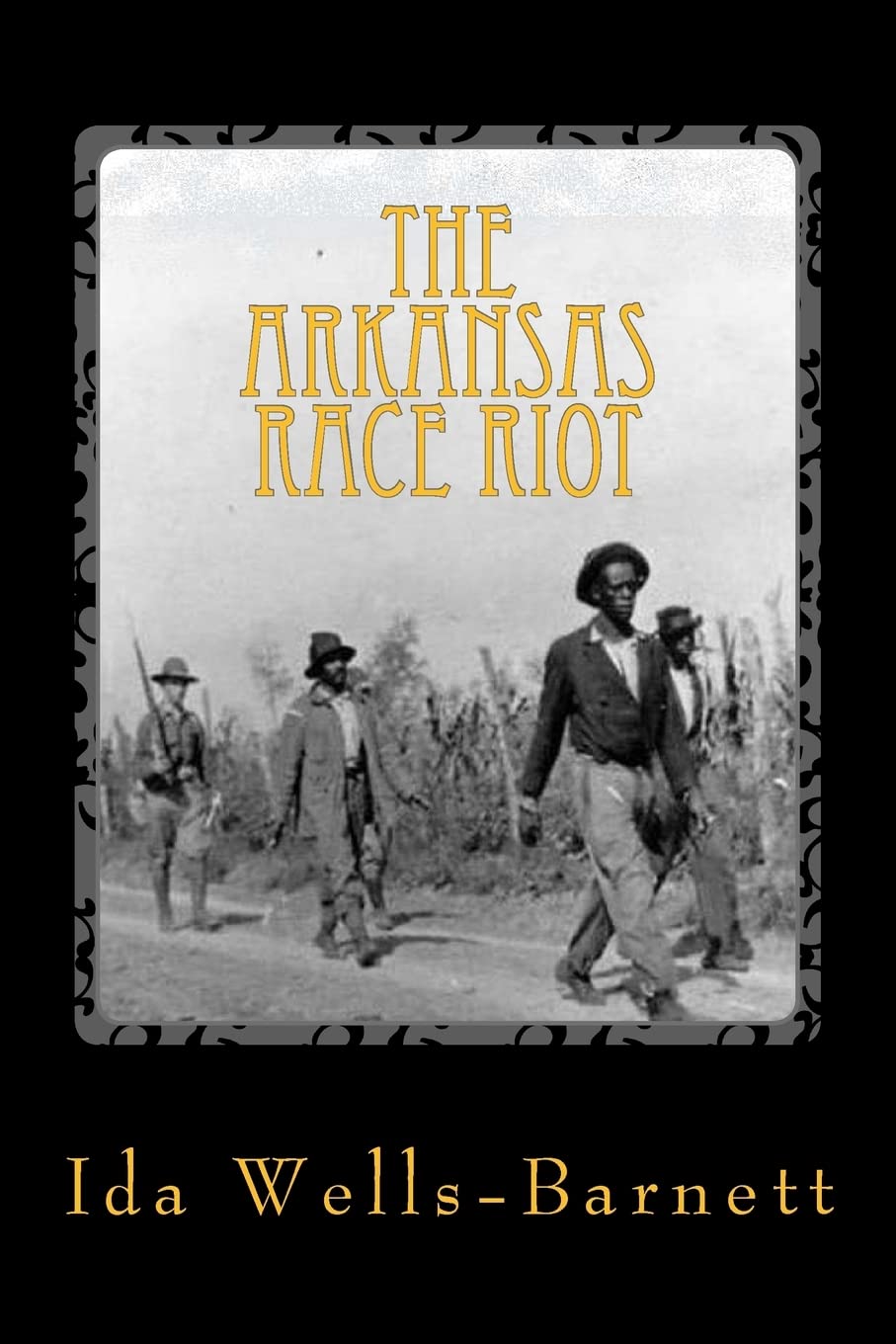
The Arkansas Race Riot by Ida B. Wells
$30.00
Free ShippingIda B. Wells-Barnett’s firsthand account of the 1919 Elaine Massacre.
Read full descriptionHide description
The press dispatches of October 1, 1919, heralded the news that another race riot had taken place the night before in Elaine, Ark., and that it was started by Negroes who had killed some white officers in an altercation. Later on the country was told that the white people of Phillips County had risen against the Negroes who started this riot and had killed many of them, and that this orgy of bloodshed was not stopped until United States soldiers from Camp Pike had been sent to the scene of the trouble. Columns were printed telling of an organization among Negro farmers in this little burg who were banded together for the purpose of killing all the white people, the organization being known as the Farmers' Household Union. As a result of these charges over one hundred Negro farmers and laborers, men and women, were arrested and jailed in Helena, Ark., the county seat of Phillips County. One month later they were indicted and tried for murder in the first degree and the jury found them guilty after six minutes of deliberation. Twelve were sentenced to die in the electric chair—six on December 27th and six on January 2nd, and seventy-five of them were sent to the penitentiary on sentences ranging from five to twenty-one years! Several national bodies among colored people, notably the Equal Rights League, sent letters of protest to Governor Brough, but press dispatches reported that the governor refused to interfere, because he believed the men had received justice. Thereupon, the Chicago branch of the Equal Rights League sent telegrams to Senators Medill McCormick and Curtis, chairman of the committee on race riots, and Congressman Martin B. Madden asking the federal government to take some action to protect these men and see that they got justice.
Proceeds go toward the continued uncovering and telling of the story of the Elaine Massacre.
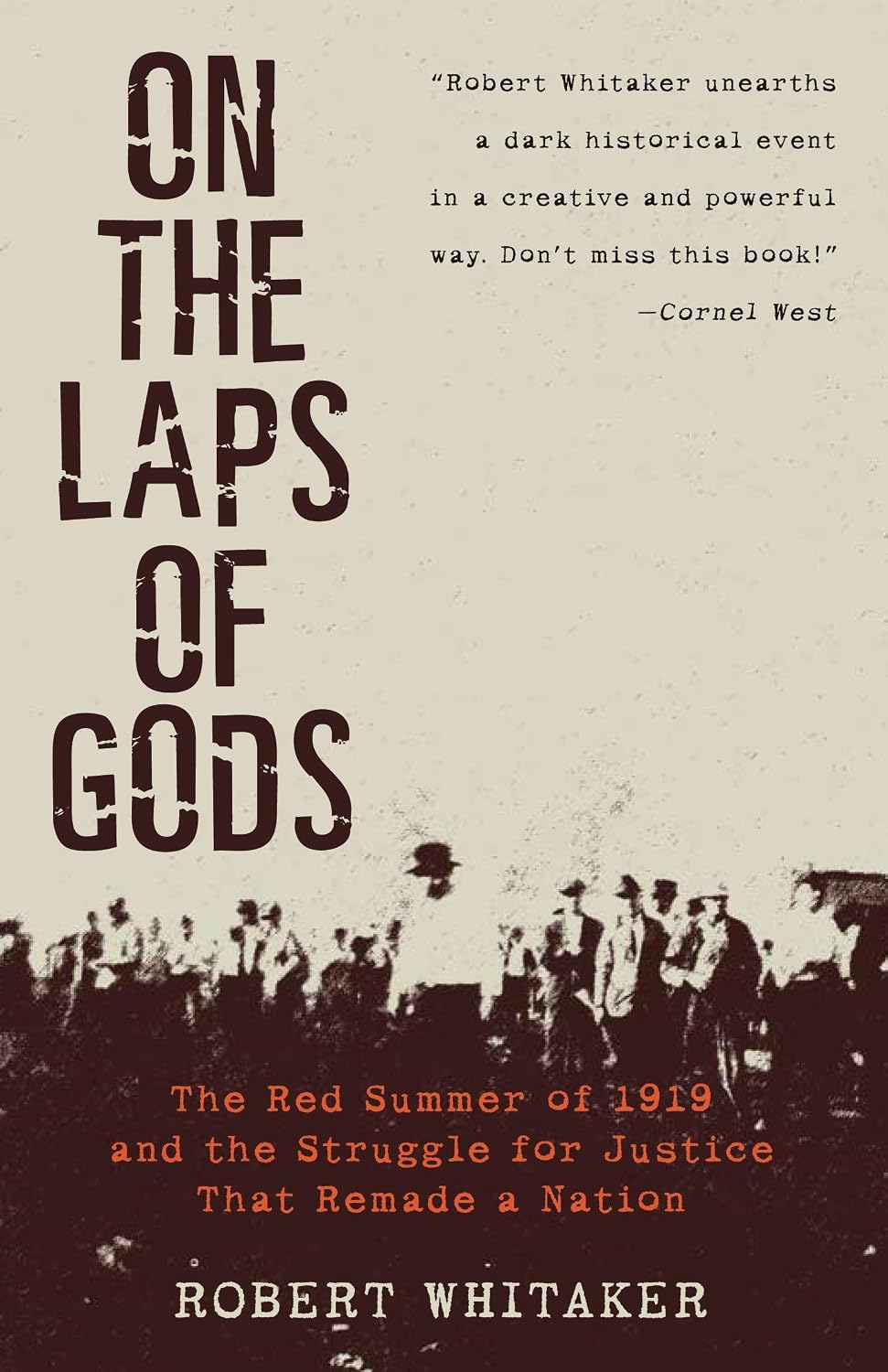
On the Laps of Gods by Robert Whitaker
$30.00
Free ShippingThe Red Summer of 1919 and the Struggle for Justice That Remade a Nation
Read full descriptionHide description
They Shot Them Down Like Rabbits . . .
September 30, 1919. The United States teetered on the edge of a racial civil war. During the previous three months, racial fighting had erupted in twenty-five cities. And deep in the Arkansas Delta, black sharecroppers were meeting in a humble wooden church, forming a union and making plans to sue their white landowners. A car pulled up outside the church . . .
What happened next has long been shrouded in controversy.
In this heartbreaking but ultimately triumphant story of courage and will, journalist Robert Whitaker carefully documents—and exposes—one of the worst racial massacres in American history. On the Laps of Gods is the story of the 1919 Elaine massacre in Hoop Spur, Arkansas, during which white mobs and federal troops killed more than one hundred black men, women, and children; of the twelve black men subsequently condemned to die; of Scipio Africanus Jones, a former slave and tenacious black attorney; and of Moore v. Dempsey, the case Jones brought to the Supreme Court, which set the legal stage for the civil rights movement half a century later.
Proceeds go toward the continued uncovering and telling of the story of the Elaine Massacre.
Every purchase helps DELTA ROOTS tell the stories of the Arkansas Delta. Questions about an order? Contact us.
Delta Roots Merch Giveaway
Register below for the DELTA ROOTS merch giveaway, drawn at the end of the 39th Annual King Biscuit Blues Festival. No purchase needed to enter.